
Dr. Sharan Srinivasan
Functional Neurosurgeon
Speaks from emergency rooms, ICUs, operating theatres, and tribunals, where milliseconds decide life, function, and dignity.
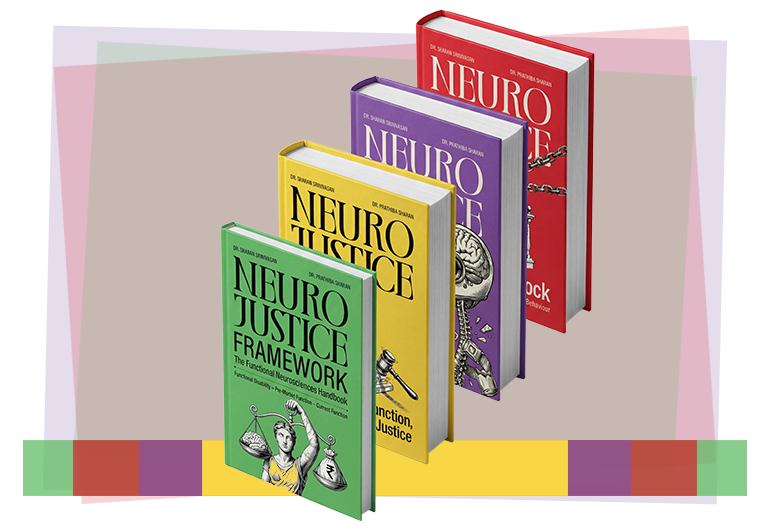
Neuro Justice is a first-of-its-kind initiative reimagining how neurological injury, disability, rehabilitation, and compensation are understood in courtrooms and in real human lives.
Built on a three-volume reference work and a future-ready operational handbook, it brings together neuroscience, neurorehabilitation, judicial reasoning, disability science, ethics, public policy, and AI into one function-first justice ecosystem.

Functional Neurosurgeon
Speaks from emergency rooms, ICUs, operating theatres, and tribunals, where milliseconds decide life, function, and dignity.
Neuropsychologist & Neurorehabilitation Expert
Brings cognition, behaviour, family dynamics, and ethical care into the justice narrative.
Together, they unite the scalpel and the conscience, the neuron and the narrative.
No single discipline can explain neurological injury, disability, rehabilitation, and compensation on its own. The trilogy creates one continuous language across medicine, law, and function.
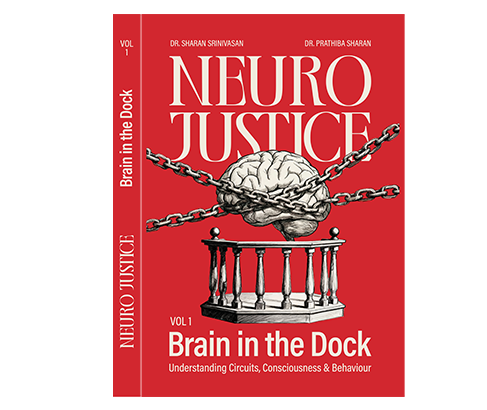
Understanding brain circuits, consciousness, and behaviour.
Brings invisible brain injuries into the courtroom, including executive dysfunction, memory failure, impaired judgment, behavioural dysregulation, emotional instability, fatigue, and attentional collapse.
It teaches courts, clinicians, and insurers to distinguish what looks normal from what functions normally.
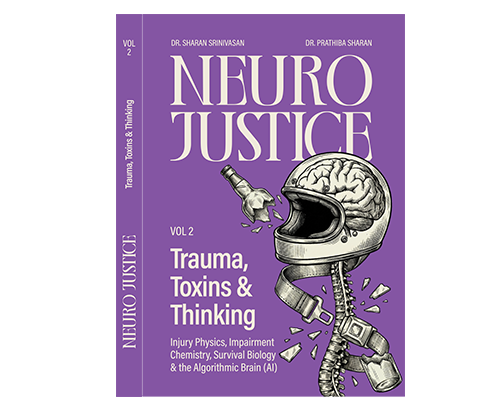
Injury physics, survival biology, and the algorithmic brain.
Connects impact, toxicity, cognition, and recovery to show how trauma reshapes thinking long after the acute event has passed.
It frames survival not as the end of injury, but as the start of a more complex functional story.
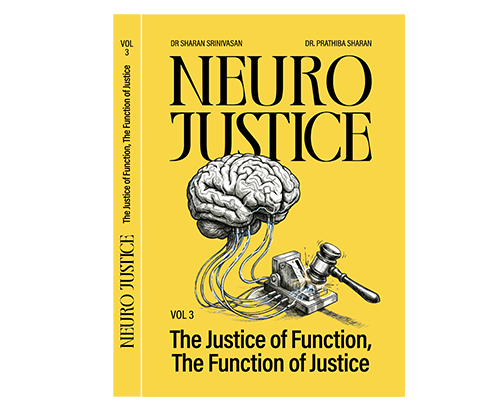
Neuropsychology, neurobehavior, and disability science.
Answers the long-standing judicial demand that compensation must reflect functional disability, not merely medical impairment.
Books can educate. Frameworks can standardize. But justice systems only change through movements, especially when verdicts close files but not lives.
Neuro Justice asks the question most systems never ask: what happened after the verdict?
Rehabilitation, functional improvement, family burden, reintegration, and quality of life become part of a measurable justice journey.

AI is useful only when the inputs are true, humane, and interdisciplinary.
With aligned science and law, AI can reduce pendency, standardize outcomes, and protect cognitively impaired individuals from compensation injustice.

Neurological disability silently erodes productivity, families, GDP, and demographic potential.
Neuro Justice positions India to lead with closed-loop justice, functional dignity as policy, ethical AI governance, and culturally aligned disability science.